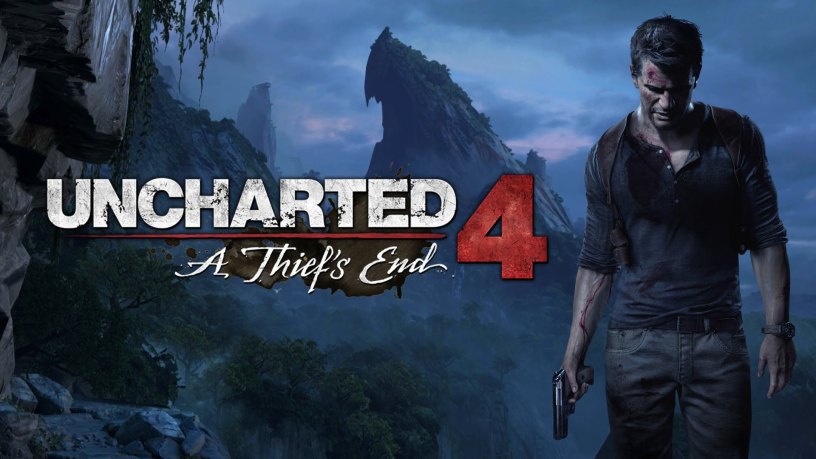
Neil Druckmann is different to most AAA video game developers.
His well-documented actorly approach to performance capture, screenplay-esque storytelling and successful sideline as a graphic novel writer already mark out the Israeli-born polymath as something of a renaissance man.
But it’s the way he plays fast and loose with the industry’s accepted norms that really sets him apart.
Without wishing to pull the curtain back too far on the uneasy symbiosis between the media and the machinery that makes the games we write about, most interviews with developers of Druckmann’s status are stultifyingly stage-managed.
They occur in sterile meeting rooms, with a representative from the publisher’s PR team watching the clock and listening to every word lest a non-signed off soundbyte somehow escapes into the conversation like an unsupervised zoo animal making a desperate bid for freedom.
When I sit down Neil Druckmann at Sony’s pre-Xmas PlayStation Experience event in San Francisco, it’s in markedly different circumstances.
Sure, there’s a Sony representative present, but he’d be hard pushed to hear anything above the rattle and hum of the very public corner of the main showfloor we’re sitting in. Plus, the PR is perched in one of the chairs we’d brought over for the interview but Neil and I are cross-legged on the floor – at the Naughty Dog man’s specific request.
Maybe it’s down to the laid-back, fan friendly vibe of the show; perhaps it’s because today is Neil’s 37th birthday and he’s refusing to enter business mode; or it could, of course, be an affectation aimed at amplifying an air of artistry.
But judging from the way he casually and candidly discusses everything from having to play the corporate PR game – “Look, if it was up to me, we would show nothing” – to the series’ future – “with the end of this story it will be <i>really hard<i> to do a sequel with Nathan Drake” – it could just be the way he is. Different.
Fittingly, then, let’s start at the end. As you might have read, Uncharted 4’s ‘A Thief’s End’ suffix isn’t just for show: the game is a full stop on both Naughty Dog’s involvement with the franchise and also the adventures of its charismatic hero Nathan Drake.
“We’ve been with this character for so long…,” explains Druckman with what sounds suspiciously like a heavy heart. “He’s at the height of his popularity, so it’s not a good business decision, but I feel like the best way to honour him is to go out on top, to finish his story.
“Whether that’s it for Uncharted? I don’t know. At the end of the day Sony owns Uncharted and they can do whatever they want. But with the end of this story it will be really hard to do a sequel with Nathan Drake. Maybe there’ll be a prequel, maybe it will be a different character – I don’t know. But this is the end for Nathan Drake.”
Whether that means death or a fate worse than it, Neil naturally isn’t saying. But it’s merely the headline-grabbing denouement to a lengthy discourse peppered with more nuanced but equally intriguing revelations about how he’s reshaping the series in his own image.
Having worked as a game designer and co-writer on the first two Uncharted instalments, Druckmann ducked the third to direct his first game, The Last of Us. He says he missed the franchise but enjoyed an “awesome” experience playing Drake’s Deception as a fan.
“I never get to enjoy our games,” he explains. “I can’t play the Last of Us, I can only hear people describing their experiences playing it. If I play it, I just get frustrated at all the things I want to fix.”
Switching gears from the Drake and Sully’s bombastic bromance to the intimate surrogate father/daughter relationship of Joel and Ellie and then back again was not without its challenges.
“Bruce Straley – my directing partner – and I talk about his a lot. Going from Uncharted to The Last of Us, it was hard to tell people to bring it down. And then when we came off the Last of Us, we were like, ‘Guys – we need to crank it back up to 11’! Directing the team, it was kind of hard to make that shift.”
What specifically do you think you brought from The Last of Us to Uncharted 4?
“The Last of Us was the first game I directed, where I was in charge of the outcome of the game, so obviously there was a lot of experience I got there that now is coming straight to Uncharted,” he admits.
“Like, how do you work with actors? How do you work with animators? How do you work with designers? Now I feel like I’m getting more and more confident making those calls whereas before I was not as confident, but I was surrounded by very supportive people.
“And then there is stuff like, with the Last of Us – and even more so with [2014’s DLC add-on] Left Behind, – the really quiet moments. We were making an action, but it was ok not to have the action wall-to-wall. It was ok to have two girls in a Halloween store putting masks on and joking around with each other.
“And getting the confidence to do that and bring that to Uncharted became really interesting because it helps show more the human side of Nathan Drake. What is Nathan Drake doing when he’s not on the adventure? And how do you put that on the (thumb)stick. How do you not just show that in a cutscene – how do you play that?
“That’s something we brought straight over from the Last of Us.”
Can you describe an example of that from Uncharted 4?
“It’s not a specific example, but with the Last of Us we introduced the concept of optional conversations where I could turn around to my ally and dig in a little bit deeper. And it’s a choice for the player, you can do it, or you don’t do it.
“Players who have engage with it can slow the characters down a little bit and have them engage in conversation, and you can find out a little bit more about their relationship, and a little bit more about their personalities. We’ve sprinkled those throughout the game.”
Earlier that day during Sony’s keynote presentation, Naughty Dog had debuted an interactive cutscene from Uncharted 4 in which Nate was reintroduced to his estranged sibling Sam, voiced by the near-ubiquitous Troy Baker, for the first time.
Nate begins effusively filling in his brother about the adventures he’s undertaken since the pair last met and partway through the exchange pauses to allow the player to decide which of three tales should be told first (each option is a precy of a previous Uncharted game’s main plot – a typically neat touch). It’s a small but nonetheless significant departure for what has always been a determinedly linear series.
“The thing I want to make sure we’re clear about that is we’re not making Mass Effect,” Druckmann elaborates with a wry smile. “Uncharted [4] has a very specific story, it has a very specific ending that’s very definitive to the franchise. But every once in awhile we felt a dialogue tree would really bring you more into the scene.
“And there’s something about Sam asking Nate about his old adventures that’s like, it would be kind of fun have Nate – and therefore the player – pick which story they want to tell first. And there’s a few other instances like that where it felt like a dialogue tree was just going to get you more into the scene and make it more interactive.”
The prospect of some of the storytelling techniques pioneered in The Last of Us finding their way into Uncharted 4 is fascinating. The series is rightly renowned for its characterisation – Drake and sidekick ‘Sully’ are as charming company as any Hollywood buddy movie duos – but has increasingly come to substitute spectacle for substance.
Revisiting the original games in their recent remastered form, it’s striking to chart how the emphasis shifted from scripted dialogue to scripted action. The third instalment is practically a string of increasingly explosive set-pieces connected by cutscenes.
“The first three had this trajectory of going bigger and more badass,” Druckmann agrees. “We didn’t want to continue that trajectory. We didn’t want to become a caricature of ourselves. So we said, Ok, set pieces are important, but how do you better tie set pieces with story so they come in at the right time to mirror some kind of personal conflict in the story?
“But also something we learned from The Last of Us is not all set pieces have to be big and explosive. Some of them can be small and intimate. And that let’s us get much more interesting and introduce different pacing than in the previous Uncharted games. So that’s the thing we’re experimenting with, trying to find a different way to switch up that formula.”
Would a fair comparison be the Bond franchise, which similarly seemed to be caught up in its own internal arms race of ‘bigger and more badass’ until EON productions switched focus to character development and storytelling with the Casino Royale reboot?
“Yeah, it’s like, maybe we should have fewer set pieces, but those set pieces should mean more. Those quiet moments are almost like a set piece. It’s all unique animation, there’s a lot of iteration that goes into that.
“In Left Behind there’s the photo booth that Ellie and Riley use. That took as much effort and work as the collapsing building in Uncharted 2. And Uncharted 4 felt like it needed some of those moments that require that much effort to build the relationships when we’re not under duress and under gunfire.”
Curiously for such a big game so close to release, we don’t know too much about Uncharted 4. The handful of reveals – at last year’s PSX and the two E3s either side – have tried their hardest to reveal as little as possible. It is, of course, deliberate.
“Look, if it was up to me, we would show nothing,” Druckmann sighs. “I don’t like spoiling. I want the player to be surprised. If you’re going to see one of these scenes in the game then you already know what’s happening. But you have to support marketing, you have to build hype for the game so it sells and you can make money and we can do it again.
“Last year at PSX we showed some meat and potatoes gunplay, nothing controversial. Then at E3 we were like, ok, here’s one of our set pieces. [At this year’s PSX] we’re pulling the curtain a little bit on the story. Now we’ve given you enough probably to whet your appetite.
“But for people who are worried we’re showing too much, I will say this is a huge game. We’ve showed you nothing.”
Druckmann won’t be drawn on specifics but, like most directors, will discuss themes until sundown.
“The heart of this is Nathan Drake’s – and maybe artists’ – struggle: how do you balance your relationship with your family and friends, and your passion, the thing you’re willing to dedicate your life to and make big sacrifices for?,” he explains, warming to his subject.
“If you look at Nathan Drake, he has dealt with obsession his entire life. Whether it’s El Dorado in Uncharted 1 or Shangri-La in Uncharted 2 or Iram of the Pillars in Uncharted 3, those have been major obsessions for him and we’ve seen it hurt his relationship. We’ve seen how between each game his relationship with Elena falls apart.
“There’s something that happens there in that gap that was really interesting for us. That’s what we want to get into. Because maybe you can’t have both. Maybe you can’t have your family and that passion and the obsession.
“When we start this story, Uncharted 4, with the scene we showed today, you see Nathan Drake is living what’s for him a very mundane life. Maybe he’s not doing what he’s meant to do. And it might not take much for his brother just to lure him back in.
“And then every level, every character interaction, it’s like, are we always coming back to that? Everything has to get filtered through, is this building on that theme? Are we presenting different arguments of how you handle this kind of conflict in your life.”
How much of this is autobiographical, I wonder. How much of this might also relate to a developer attempting to balance his family life – Druckmann became a father for the first time during the production of The Last of Us – with his own all-consuming passion for creating massively involved video games?
“My approach is to always approach things from a very personal level and for me, this was the nugget I could latch onto,” Neil considers, before withdrawing slightly, “I wouldn’t go as far as to say it’s autobiographical but we are putting a lot of our heart and soul into it because as game developers – and I don’t just think it’s on a director level – it’s on a lot of levels, we’ve put a lot of ourselves and a big percentage of our life into our passion.”
I momentarily become conscious that for an interview about one of the most anticipated games of the next twelve months, we haven’t actually talked much about the mechanics of the game itself.
The closest we came was when I glibly asked if the decision to include a whip this time round was Druckmann essentially admitting defeat in denying Drake’s role as a modern-day Indiana Jones cipher.
“ It’s not a whip! It’s a rope with a grappling hook at the end!” he interrupts with faux-indignance, before conceding with tongue inching cheek-wards, ”the way iconically it sits on him it might look Indiana Jones-esque” and explaining how it has actually transformed traversal.
“The thing about Uncharted, which we started figuring out with Uncharted 1 and really hit our stride in Uncharted 2, is that feeling of verticality. That’s what makes our shooter different to other shooters. You could easily traverse up an area, drop down and roll into cover – and this rope allows you to do that more quickly and in more dynamic ways.
“I could be on the second floor having a gunfight with guys below, run across run across to the edge, throw my rope, swing around, land on this guy, roll around and get into cover while my allies are there.”
So where, I inquire, has the increased power of the PlayStation 4 allowed him to take Drake that he couldn’t in previous Uncharteds?
“It’s obviously allowed us to get more ambitious with how wide the levels are, how much player choice there is, the fidelity of the cutscenes,” he explains. “Like, I don’t know if you’re noticing it but the way flesh is moving over bones, we can get those really nuanced performances from our actors in a way we couldn’t have before. And the more you can do that, the less you have to rely on dialogue, and it really can be just about a look from a character.”
You’ve previously called Uncharted 4’s levels ‘wide linear’. What does that actually mean?
“What we’re trying to do is get the player intellectually engaged with an action set up. What that means is, I might drive my jeep into a set up where there’s a bunch of Shoreline soldiers – that’s the company [newly revealed antagonist] Nadine Ross runs. I could drive my jeep in and go with guns blazing. I could stealth around. I could see a sniper up there, so I could climb up and traverse and steal that guy’s sniper rifle…
“It’s not open world in that you can traverse anywhere in the game, the story has structure and momentum, but within each set up, each area, you’re thinking more.”
Does that mean, for example, the coastal village Nate and Sully drove through in the E3 demo has multiple paths the player can take?
“Yep – all those side streets you saw, you can drive down those side streets.”
How do you balance this newfound player freedom with the need to tell your definitive, carefully-crafted story?
“It’s a balance because sometimes telling the story is giving the player more freedom, because so much of the storytelling is getting you in line with where Drake is. And the way you do that by getting you to think like Drake.
“A simple thing we try and do [during development] is as I’m playing through the level, I ask myself, what am I thinking as Drake? What would I be frustrated by? And then you write dialogue almost as the player for Nathan Drake. You might think, ‘that’s a weird thing – why would they put that there?’ And then you hear Nathan Drake say that and suddenly you’re more in line with him.
“And likewise we want to build a relationship between Nate and Sam, so we create a combat scenario where systemically you guys have to work together. These are the things we did with Joel and Ellie in The Last of Us. How do you use interactivity to build relationships, to tell a story, to ground you in the world?”
Is the relationship between Nate and Sam analogous to that of Joel and Ellie?
“In some loose way, sure, you could say that. The Last of Us really was about Joel and Ellie, everybody else is a supporting character. Here there’s a main cast. At times it’s about Nathan Drake and Sam, at times it’s about Nathan Drake and Sully, at times it’s about Nathan Drake and Elena. It’s about the cast of characters in this family unit, and how these satellites of other characters around Nate are at times at odds with each other and they’re pushing and pulling Nate in different directions.”
And so we come to the end – of Nathan Drake, of Neil Druckmann, of the interview. If you’re still looking for clues in the parallels between the leading man and his director then know that the latter will be taking a long-delayed vacation and the opportunity to “take a step back, watch some movies, read some books, get inspired by a bunch of things, spend some time with my family, find that balance, and then come in with a fresh set of eyes and be like, ok, what do we want to tackle next?”
Druckmann has made it clear that what to tackle next does not involve Nathan Drake. So what does he have in mind?
“Sometimes you play a really good indie game and you go, oh man, it would be really fun to work with something small. But the thing that’s exciting when you work at Naughty Dog is you come up with a story, you have something in your mind for it, and then you bring in actors and they surprise you, they make it better than what was on the page, and you’re like, that’s cool. It’s literally a miracle how this thing comes together. It’s like an army of talent. I’m kind of addicted to that.”
A version of this feature was originally published by Eurogamer on January 20, 2016
 Dan Silver