Now in its third year, PlayStation Experience (or PSX, for short) is a uniquely charming corporate shindig that’s equal parts video game expo, marketing conference and fanboy convention. Building on the success of previous events in Las Vegas and San Francisco, thousands of gamers arrived in Anaheim to worship at the cross – and circle, square and triangle – of Sony’s all-conquering console and play some of the 150-odd titles on the show floor or attend panels starring industry heavyweights including Hideo Kojima and Naughty Dog’s Neil Druckmann.
Unlike, say, E3 or Gamescom, the vibe is intimate, informal and almost relaxed. AAA attractions like Uncharted, Resident Evil and Destiny share boothspace with a battalion of indie games, all of whose developers are on hand to talk the curious through their creations. Tellingly, the ‘behind closed doors’ area where industry insiders can get priority access to games is tiny and understocked; no, PSX is intended as a gathering for what former Sony America President and CEO Jack Tretton termed the PlayStation Nation and with its walls everyone’s an equal.
This spirit of inclusivity extends to the keynote address that kicks things off on Saturday morning. Allowing several thousand rabid fanboys to pass the velvet rope and enter a space usually reserved for media and marketeers transforms this traditionally staid presentation into something more resembling a pep rally. Game reveals are roared to the rafters and Sony execs are welcomed onto the stage like rock stars. Popular President of Sony’s Worldwide Studios Shuehi Yoshida is given a standing ovation, his opening gambit drowned out by a terrace chant: ‘YOSH-I-DA! YOSH-I-DA!’
“Presenting is nerve-wracking but when you just show up and people are like that, it just makes it so easy and exciting,” Yoshida tells me the following day, insisting it’s his favourite event of the year with only the mildest whiff of corporate obligation.
“People plan a vacation in December around it. This is a great destination to come to, so I’m so happy people like it… It’s not as crowded as Tokyo Gameshow or Gamescom, people don’t have to wait for hours to play games. Actually, people can play many games. So people see the value of paying such a high price of entry.”
People like Oscar Sanchez, who has travelled down from San Francisco for the weekend with his partner Shelby at a cost of around $500 on top of their $75 two-day ticket.
“You pay for experiences like this, he explains.”I don’t eat a lot of take out every day. I put that money aside. I don’t go to Starbucks.”
Oscar went to the PSX event in his hometown last year and “kind of fell in love with everything.
“I’m a pretty big Sony fanboy I guess,” he admits.
By definition almost everyone here is and this peculiar bond between player and platform is arguably what sets PSX apart from other events of its ilk. When Chairman of Sony’s Worldwide Studios Shawn Layden tells the crowd at the end of the keynote, ‘the PlayStation Nation is so powerful and we love you all”, a loud voice reflexively replies. ‘We love you too!’ It’s a sentiment reciprocated by hundreds of hyped-up attendees.
Yoshida has his own take on it: “We make the games and game systems for those people. They know that we’re working hard for them – so that’s what connects us with them.”
Ah, the games. After a year in which Sony spent an inordinate amount of time talking about hardware, be it the two new PS4 consoles – Slim and Pro – released in the autumn or the PSVR headset that finally hit shelves in October, PSX was awash with software.
Over 50 titles were showcased in the opening keynote alone, culminating with the show-stopping teaser trailer for The Last of Us Part II – a long-denied but now finally confirmed sequel to one of the previous console generation’s very best games, masterfully revealed with a brooding clip in which a blood-soaked Ellie strums a murderous Shawn James revenge song, Through the Valley, and vows to kill every last one of her enemies.
“If the first game’s core theme was really about the love between these two characters and how we build that through the story, music, interaction and gameplay mechanics, this story is the counter of that, this story is about hate,” revealed game director Neil Druckmann in his standing room only panel on Saturday afternoon.
The game is set some years after the end of the first one and sees Joel replaced by Ellie as the main playable protagonist, but the biggest surprise was surely the game being revealed here at all.
“There was a big discussion between [developers] Naughty Dog and Sony about where should we show this Last of Us trailer,” explained Druckmann. “Some people were saying we should wait until E3 as E3 is bigger. But we’re such fans of PSX and being here with the fans that this was the venue for it. There’s no other option.”
Shuhei Yoshida later confirmed to me that the story was true.
“I understand the development team felt that PSX would be a very special place to announce their title,” he said.
So it was a nice thank you to PlayStation fans?
“Yeah, absolutely.”
Naughty Dog’s standalone Uncharted 4 expansion, The Lost Legacy, also opened the keynote, emphasising the Santa Monica-based developers’ position as the pre-eminent PlayStation studio – as did the visceral roar of approval that echoed around the hall whenever their log was displayed on the event’s massive video screens.
“People have choices of systems that they can play games on – more than just console games, there are games everywhere,” Shuhei Yoshida explained the following day. “But people choose PlayStation to play games like Naughty Dog’s, which aren’t available anywhere else, and they associate Naughty Dog with the highest standards of quality and drama and gameplay they can enjoy. For lots of fans it’s very important that Naughty Dog games are available on PlayStation.”
It’s telling, though, that neither Naughty Dog title revealed at PSX represents a new IP. In fact almost all of the top tier AAA games showcased on stage have a number or similar spin-off signifier suffixed to the title. Destiny: The Dawning, Street Fighter V, Knack 2, Gran Turismo Sport, Ni No Kuni II, Ace Combat 7, Gravity Rush 2, Marvel vs Capcom Infinite. Only two are breaking new franchise ground: Horizon Zero Dawn and The Last Guardian – and the latter was first revealed almost a decade ago.
The reasons are manifold but the bottom line is publishers of AAA games are becoming increasingly risk averse. The current generation of hardware makes the cost of developing lavish titles prohibitive to the point where funding one that doesn’t have a ready-made audience is a potentially ruinous gamble. The march towards 4K graphical fidelity only exacerbates the problem.
Although as the recent disappointing sales for the excellent shooter Titanfall 2 proved, even sequels are no longer a sure thing. Which is perhaps why so many publishers are now turning to remakes and re-masters instead. Nostalgia might not be what it used to be but old games can be a great way to generate new revenue streams.
Gamers love remasters because they know exactly what they’re getting – not least the chance to revisit and relive moments from simpler, perhaps even happier, times. Publishers love them because much of the creative heavy lifting has already been done, thus minimising much of the financial outlay and risk. And some developers see them as a chance to preserve important cultural artefacts from gaming’s physical storage-based past in the cloud for generations to come to enjoy,
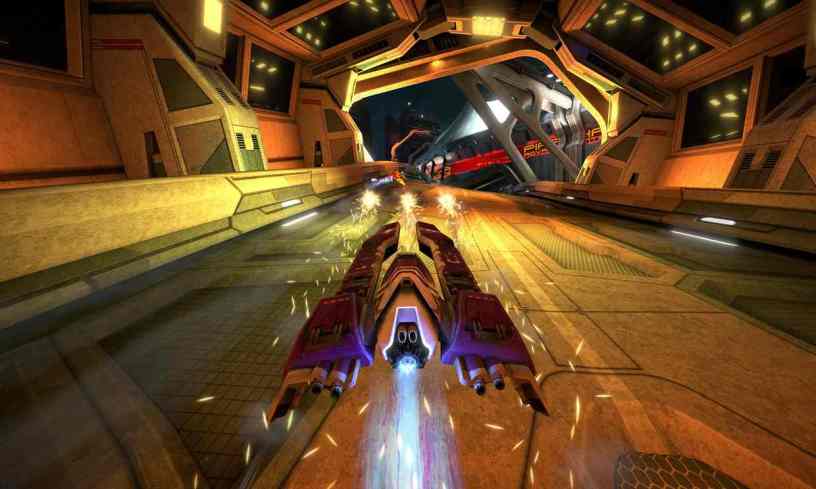
The distinctive aroma of vintage gaming hung over PSX like a cloud of Brut 66 aftershave. Early PlayStation mascot Crash Bandicoot returned in the N Sane Trilogy; Shawn Layden wore a Wipeout t-shirt on stage to celebrate the seminal racer’s Omega Collection update for PS4; and cult classics Parappa the Rappa, Patapon, LocoRoco and Windjammers all received the warmest of receptions from gamers barely old enough to remember them the first time round.
“Why is there such a wave of nostalgia at the moment? Because these games are fantastic!” exclaims Kara Massie, the producer of Activision’s Crash Bandicoot remake. “We can recreate these things from the ground up and make it look and feel and sound like any new game that’s being released in 2017 so why not? They’re really, really fantastic games and still completely compelling to play.”
Shuhei Yoshida echoes Massie’s sentiments when asked posed with a similar question about what’s driving this rampant retro dev scene.
“People asked us for it. You saw the reactions when we announced those titles. It’s amazing to look at WipEout in 4K, or Parappa the Rappa on the big screen. The teams have completely redone the graphics, but the original game is intact… People have asked for it for the longest time, and we weren’t able to respond to that demand before. Judging from the reactions, I think that we’re doing the right thing.”
There’s still plenty of innovation to be found at PSX, though, thanks to its thriving indie scene. One of the event’s founding principles was to provide a platform for independent developers, and a significant chunk of the keynote was devoted to showcasing smaller games, from the epic space combat of Dreadnought to Supergiant’s party based RPG Pyre and haunting puzzler What Remains of Edith Finch.
Well over a dozen indie titles got their moment in the limelight on stage and dozens more were given valuable and prominent exposure to mainstream gamers on the showfloor.
“Sony have been fantastic with indies for some time and it’s one of their biggest strengths that they put a lot of effort into getting indies onto their platform as well as the AAA games,” explained Ollie Purkiss from Guildford-based studio Wonderstruck. “We’re working with Sony on [massively multiplayer sandbox game] Boundless and they’ve been so supportive in all ways to bring this game to their platform, which is great.”
Purkiss and his colleagues have spent the weekend holding the hands of gamers curious to take their first steps in Boundless’ beautiful connected voxel worlds. And their prime position in the very centre of the conference hall means there have been plenty of people to chaperone.
“The position they put things in is fantastic,” Ollie says, gesticulating at the massive stands around his more modest berth. “We expected to be in a separate area and we were really pleased when we found we were here – next to Resident Evil VII, Call of Duty and Uncharted. And it’s brilliant. That just shows how serious Sony are about all different types of gaming.”
Los Angeles resident George, who has attended all three PSX events with his wife Chenan, can’t help but concur. He used to be an Xbox man but made the switch to PS4 primarily because most of his friends did too.
“It seems like the PlayStation community is just kind of stronger, with that indie focus,” he tells me during a break from touring the show floor.
“I’m not a gamer but I’ve come here so I can try out all these games that I will never actually play,” admits Chenan.
“We just have a good time walking the floor, looking at games,” says Gerard. And amid all the hype and hullabaloo, that’s as good a summary of the appeal of PSX as you could hope to find.
A version of this feature was originally published by the Guardian on December 5, 2016.
 Dan Silver